
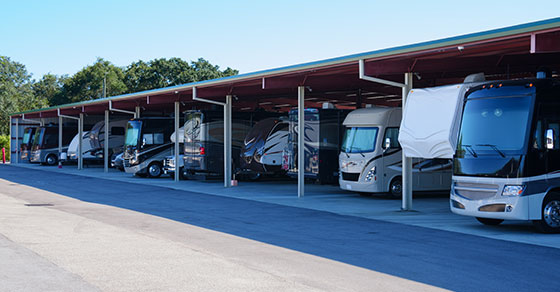
How to Safely Tow and Park Your RV at a Storage Facility
Moving a towable RV or travel trailer into storage involves more than simply driving to the facility and backing into a space. Good preparation starts before you leave home and continues until the trailer is positioned and secured in its assigned outdoor parking area.
For RV owners, careful towing and parking can make the process much more manageable. At Bay Self Storage, we provide designated outdoor parking for trailers and boats. The following guidance covers practical RV towing and RV safety considerations, but you should always follow the instructions for your specific tow vehicle and trailer, along with applicable road rules.
What to Know Before Towing and Parking Your RV
Safe RV parking starts with knowing what to inspect before departure, how a trailer changes the way your vehicle handles, and what you’ll need to consider when manoeuvring into a storage space.
A little planning can help you approach the trip more confidently and avoid discovering a problem only after you’ve arrived.
Check Your Tow Vehicle and Trailer Before Leaving
Complete a basic check of your towing setup before heading to storage. Review the condition of the tires, lights, mirrors, hitch connection, safety chains, and other equipment involved in towing your trailer.
Your setup needs to meet the requirements for the specific tow vehicle and trailer you’re using. Manufacturer instructions and applicable local requirements should guide any technical decisions.
These checks support RV safety, but they can’t eliminate every risk that comes with towing. If something about your equipment doesn’t look or feel right, address it before starting the trip.
Make Sure the Trailer Is Ready for Travel
The trailer itself also needs attention. Loose belongings or equipment can shift during transportation, so secure items before leaving.
Doors, compartments, windows, awnings, and other exterior components should be closed and secured according to the manufacturer's instructions. If your trailer has been parked for an extended period, take time to look over its general condition before towing it again.
The goal isn't to follow a one-size-fits-all preparation routine. It’s to make sure your particular trailer is ready to travel.
Account for How Towing Changes Your Driving
Towing additional weight and length changes how your vehicle responds. Acceleration, braking, turning, lane changes, and general handling can all feel different with a trailer attached.
Use smooth steering and gradual braking, and give yourself room to complete turns without forgetting about the trailer behind you. Added length also matters when navigating entrances, intersections, parking areas, and other tighter spaces.
Vehicle-specific towing instructions and applicable road laws should always take priority over general RV towing advice.
Know Your Trailer’s Full Dimensions
Before reserving RV parking, know the trailer's complete length rather than relying only on the dimensions of the main body.
Attachments or components extending past the trailer itself can affect how much space you actually require. Accurate measurements make it easier to compare your trailer with an available outdoor parking space and understand how much room you'll have when positioning it.
At Bay Self Storage, the entire trailer needs to fit within the boundaries of the rented parking space.
Plan Your Approach Before Backing Into the Space
Once you arrive, don't rush straight into the backing manoeuvre. Slow down and look at the route to your assigned outdoor parking space first.
Check the surrounding area for parked vehicles, other trailers, curbs, posts, gates, and anything else that could affect your approach. Knowing where those obstacles are before you begin can reduce unnecessary repositioning once the trailer is moving.
Take the time you need to understand the space before committing to an angle.
Use a Spotter When Backing Up When Possible
A spotter can be useful when backing a trailer, particularly where visibility or clearance is limited. The spotter can watch areas you can't easily see from the driver's position and help you judge distance from surrounding objects.
Agree on clear signals or another reliable way to communicate before you start. If you lose sight of the spotter or communication becomes unclear, stop the vehicle until you can re-establish contact.
Don't assume storage facility staff will provide backing or spotting assistance unless that service has been specifically arranged and confirmed.
Position and Secure the Trailer Before Leaving
After the trailer is in place, confirm that it sits completely within your assigned outdoor parking space. Check the position and surrounding clearance before unhitching or leaving the property.
Complete your usual procedures for making the trailer stable and securing it according to the manufacturer's guidance and your normal storage practices.
No parking technique or security measure can guarantee protection from every possible problem, so focus on careful placement and appropriate securing procedures.
What to Check Before Choosing RV Parking
An outdoor parking space needs to suit the trailer you're actually bringing to the facility. Compare the complete trailer length with the available space and confirm that nothing will extend beyond the rented area.
You should also think about how you'll access and manoeuvre within the property. If backing a trailer in a confined area is unfamiliar, consider your comfort level before arrival and make sure you understand where your assigned space is located.
At Bay Self Storage, our relevant RV and boat offering is designated outdoor parking, so customers should choose their space with those outdoor conditions in mind.
Common RV Parking Mistakes to Avoid
One of the simplest mistakes is arriving without knowing the trailer's full dimensions. That can create problems if the assigned area isn't suitable for the total length of the trailer and its attachments.
Rushing the backing process can also make an already awkward manoeuvre harder. Take your time when visibility is limited, stop if you're uncertain about clearance, and reposition when necessary rather than forcing the trailer into place.
Finally, don't skip basic towing checks because the trip to storage is relatively short. Inspect the setup before travelling and take another look at the trailer after you've parked it. You should also avoid assuming that our staff will tow, position, or park your trailer unless specific assistance has been confirmed in advance.
Make RV Parking Safer From Tow to Storage
Careful preparation, controlled RV towing, and deliberate positioning can make moving a travel trailer into RV parking more straightforward. Knowing the trailer's dimensions, inspecting your setup, and taking your time when backing all contribute to a better-planned storage trip.
We offer outdoor parking for eligible trailers and boats at our Timberlea facility. If you're considering RV parking, check the available space requirements and confirm that your trailer is suitable before reserving.
Reach out to Bay Self Storage today at (902) 446-9999 or click here to get in touch online.
Frequently Asked Questions
How Do I Know If My RV Trailer Will Fit in a Storage Space?
Measure the complete length of your trailer, including components that extend beyond the main body, and compare that measurement with the available parking space.
The entire trailer must fit within the rented area. Confirm space suitability before completing your reservation.
Should I Practise Backing My RV Before Taking It to Storage?
If you aren't very familiar with backing a trailer, practising in an appropriate open area may help you become more comfortable before navigating a storage property.
Use slow, controlled movements and consider using a spotter when practical. The best technique can depend on your particular tow vehicle and trailer.
What Should I Check Before Towing My RV to Storage?
Review the hitch setup, safety equipment, lights, tires, mirrors, and exterior trailer components before leaving.
Follow the specific requirements and instructions for your trailer and tow vehicle rather than relying solely on a general checklist.
Does Bay Self Storage Offer Indoor RV Parking?
Our relevant trailer and boat storage service is outdoor parking.
We don't describe our heated self-storage units as indoor RV parking, and customers should use our RV and boat storage information when looking for trailer parking options.
Does Bay Self Storage Offer Climate-Controlled Units?
No. We offer some heated self-storage units, but they aren't climate-controlled.
Our heated units are separate from our outdoor trailer and boat parking and shouldn't be treated as RV or trailer storage.